Granular Activated Carbon System
PWC broke ground on its new Granular Activated Carbon Treatment System (GAC) on October 21, 2026. This major investment marks a major milestone in PWC’s ongoing efforts to address PFAS in the community’s drinking water. The new GAC system will use granular activated carbon to filter PFAS, or per- and polyfluoroalkyl substances, from drinking water.
Like other drinking water utilities throughout the Cape Fear River Basin, PWC is a passive receiver of PFAS contamination originating from sources outside its water treatment operations. PWC does not manufacture PFAS or introduce these chemicals into the Cape Fear River, but PWC is responsible for treating the water it provides to customers and meeting applicable federal and state drinking water standards.
A Long-Term Investment in Fayetteville
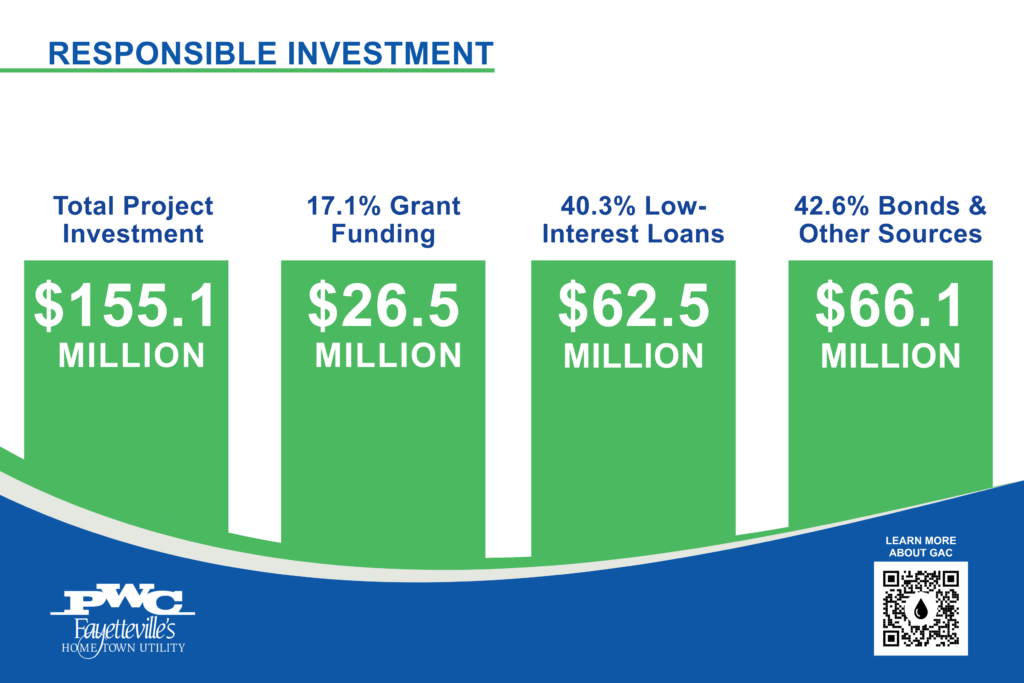
The GAC project represents a $155.1 million investment in PWC’s water treatment infrastructure. Funding includes:
- $26.5 million in grants
- $62.5 million in low-interest loans
- $66.1 million from bonds and other sources.
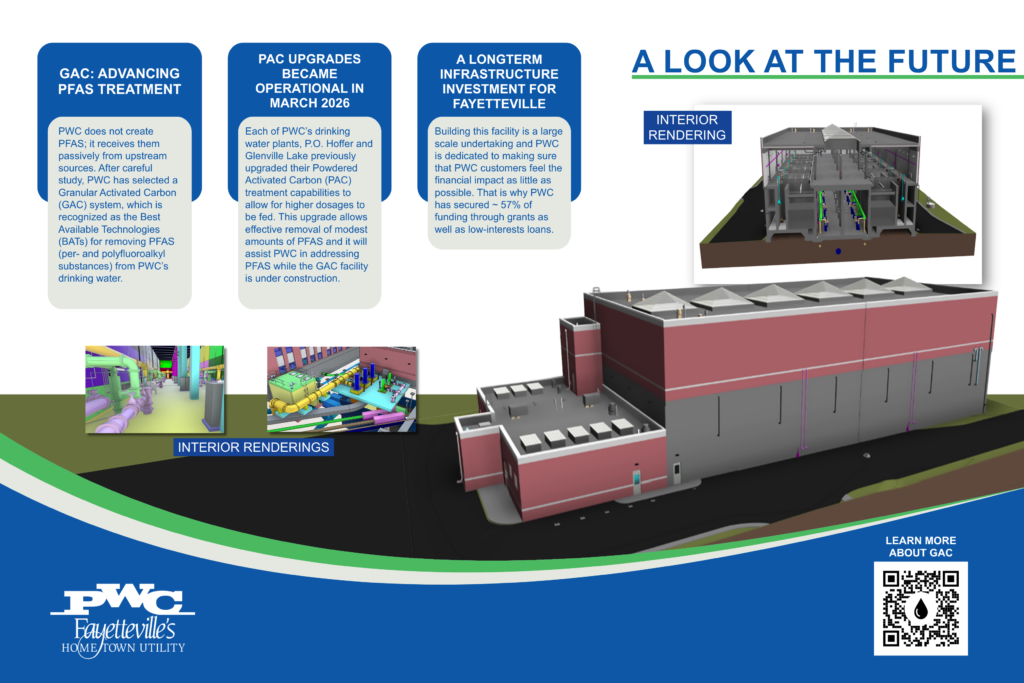
PWC has worked to secure grants and low-interest financing to help reduce the financial impact of this significant infrastructure investment on PWC customers.
How GAC Treatment Works
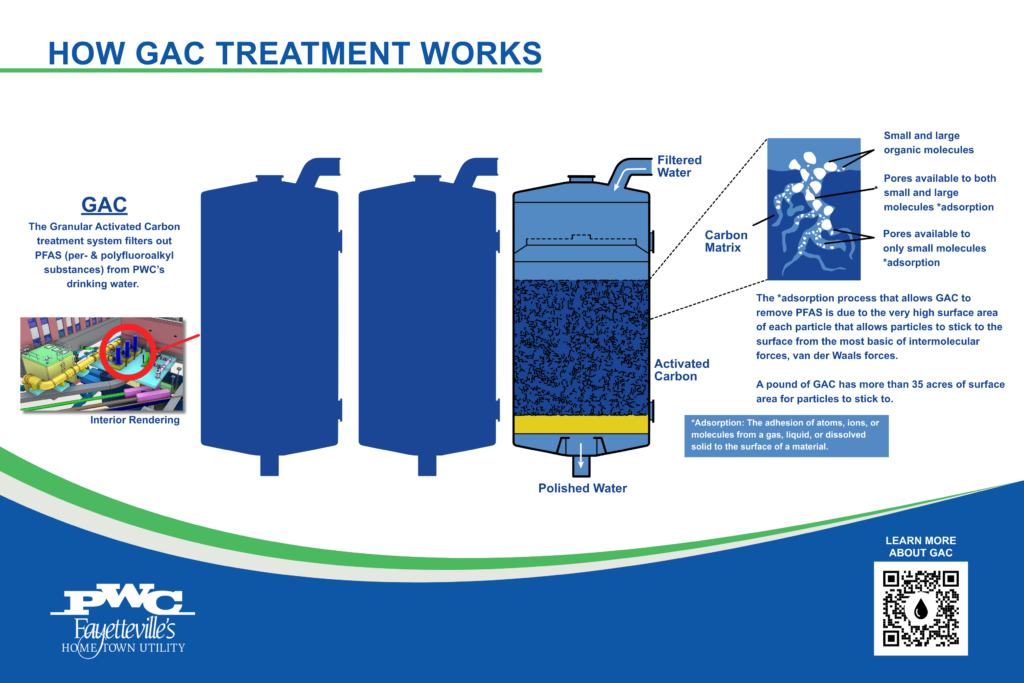
Granular activated carbon removes PFAS through a process called adsorption. GAC has an extremely high surface area, allowing particles to adhere to the carbon. According to the project materials, one pound of GAC has more than 35 acres of surface area available for particles to adhere to.
PWC selected GAC after careful study, and the technology is recognized as a Best Available Technology for removing PFAS from drinking water.
The Road to Groundbreaking
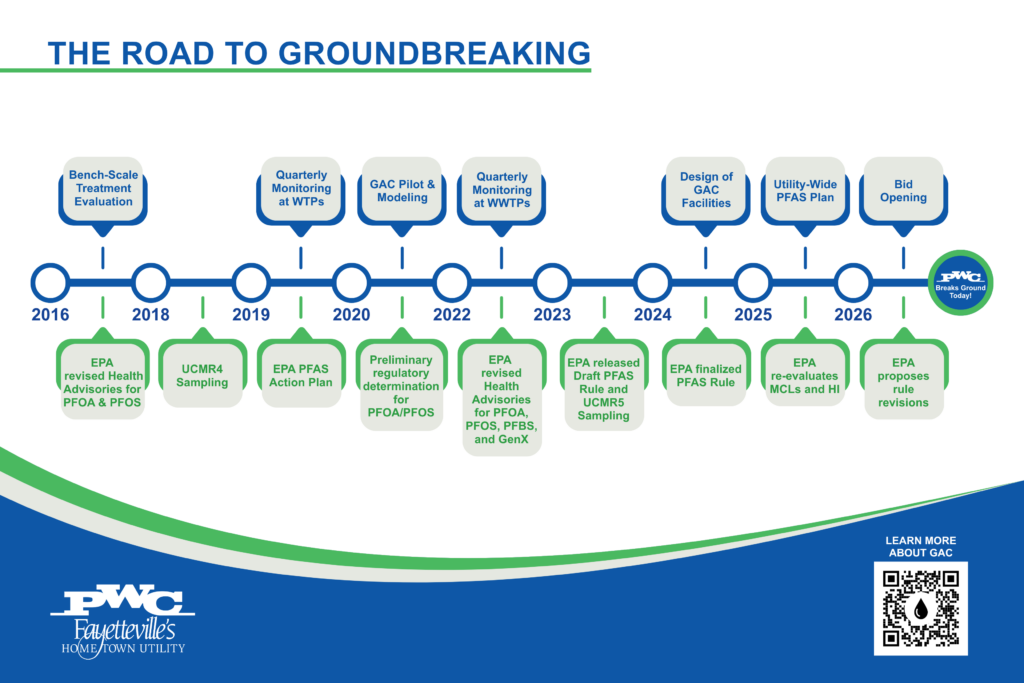
The groundbreaking follows years of monitoring, evaluation, and planning. PWC’s work has included bench-scale treatment evaluation, quarterly monitoring, GAC pilot testing and modeling, facility design, development of a utility-wide PFAS plan and the project bid process.
Preparing for the Future
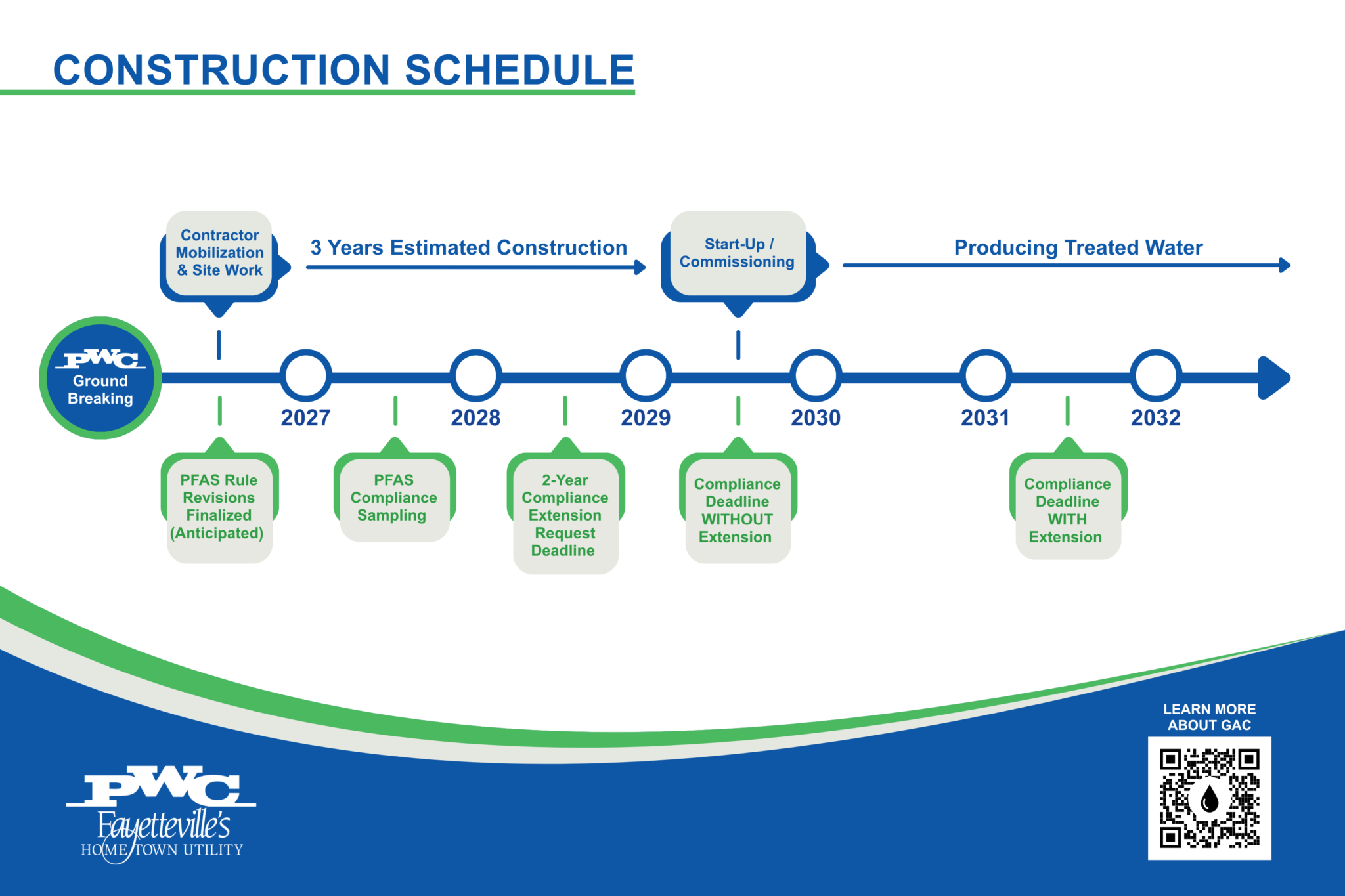
Construction of the GAC treatment system is estimated to take approximately three years, beginning with contractor mobilization and site work followed by start-up and commissioning.
While the GAC facility is under construction, PWC’s P.O. Hoffer and Glenville Lake water treatment plants have upgraded their Powdered Activated Carbon treatment capabilities. Those upgrades became operational in March 2026 and allow higher PAC dosages to help address PFAS during construction of the GAC facility.
Why the GAC Project Matters
- Protecting public health: PFAS are persistent chemicals that can remain in the environment for extended periods. Reducing PFAS in treated drinking water helps limit potential exposure for residents and families.
- Responding to stricter standards: In April 2024, the U.S. Environmental Protection Agency announced new national PFAS drinking water standards at the P.O. Hoffer facility. The standards announced at that time established a 4-parts-per-trillion limit for certain PFAS, with a five-year compliance period.
- A solution selected through research: PWC conducted treatment studies between October 2021 and October 2022 and determined that GAC was the most effective treatment approach for its facilities. This is a customized infrastructure improvement, not a simple equipment replacement.
- Long-term infrastructure investment: GAC treatment represents an investment in Fayetteville’s water system that will help protect drinking water quality and support the community’s future needs.
- Protecting the Cape Fear River: PWC has advocated for over a decade to reduce industrial pollutants entering the Cape Fear River, its primary drinking water source. The GAC project complements those source-water protection efforts.
- Partnership and shared responsibility: The project highlights the importance of cooperation among PWC, elected officials, state environmental regulators, and funding partners to address a challenge affecting the broader Cape Fear River Basin.